At a Glance
Item | Specification |
Product | Stainless steel coil & strip (cold rolled and hot rolled) |
Standard | ASTM A240 / A480 · EN 10088-2 · JIS G4304 / G4305 · GB/T 3280 |
Grades | 201 · 304 · 304L · 316 · 316L · 321 · 310S · 430 · 904L · 2205 · 2507 |
Thickness | 0.3 – 3.0 mm (cold rolled) · 3.0 – 12.0 mm (hot rolled coil) |
Width | 1000 / 1219 / 1500 / 1800 mm, or slit to your width |
Slit width tolerance | ±0.1 mm |
Finish | 2B · BA · No.4 · HL · 8K mirror · No.1 |
Coil ID | 508 mm / 610 mm |
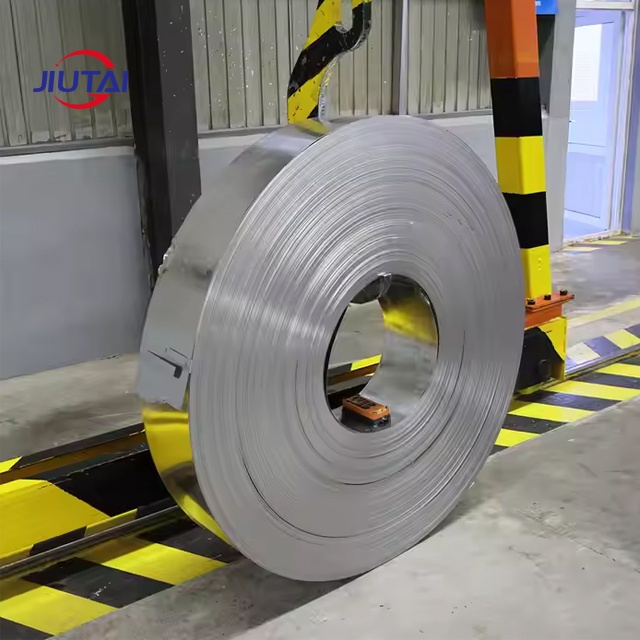
Coil weight | 2 – 8 MT per coil |
Edge | Mill edge or slit edge |
Certificate | EN 10204 3.1 mill test certificate |
MOQ | 25 MT per size, or 1 × 20' GP container. Mixed sizes in one container are negotiable. |
Step 1 — Coil or Strip?
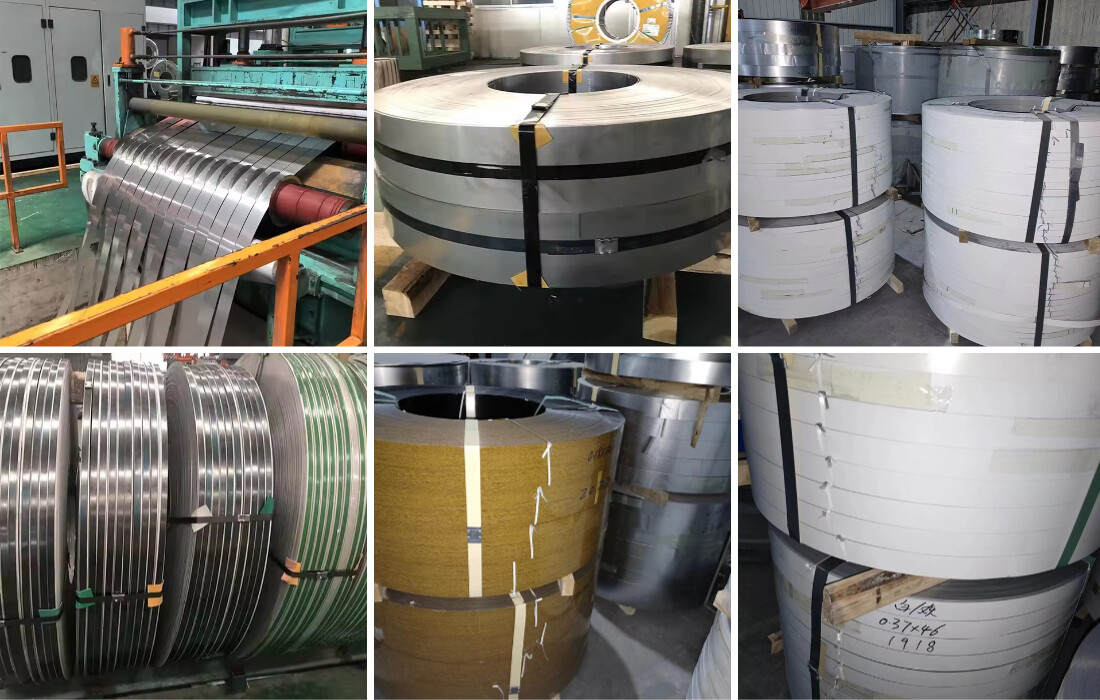
Buyers often use the two words interchangeably, but on an order they mean different things. Getting this right on the enquiry saves a round of emails.
| Coil | Strip |
What it is | Full-width mill coil, 1000–1800 mm | Narrow band slit from a coil |
Typical width | 1000 / 1219 / 1500 / 1800 mm | 10 – 600 mm |
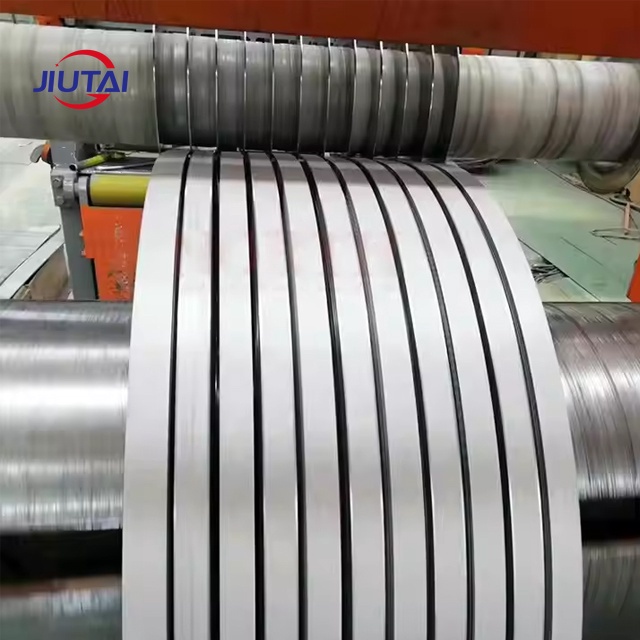
How you get it | Direct from the mill, or de-coiled | Coil run through a slitting line |
Tolerance | Mill standard | ±0.1 mm on width, edge burr controlled |
Cost | Lower — no extra pass | Adds a slitting charge per tonne |
Choose it when | Your line slits in-house, or you need full width | Your line takes a fixed narrow width |
If your line slits in-house, buy full-width coil and slit yourself — you control the tolerance and skip the slitting charge. If you need a fixed narrow width, order strip and we slit to ±0.1 mm.
Step 2 — Pick Your Grade
Eleven grades, arranged from least to most alloyed. The third column is the one that saves you money: it tells you when a grade is the wrong call.
Grade | What it is | Choose it when | Avoid it when | Page |
201 | Mn/N replaces part of the nickel | Price is the deciding factor; indoor decorative and light fabrication | Coastal, poolside, anywhere chlorides reach it — and it has no low-carbon version, so welded wet service is out | 201 Coil |
304 | The 18-8 default | General fabrication, food equipment, architectural trim — no specific threat to design against | Seawater, de-icing salt, or welded plate you will not anneal | 304 Coil |
304L | Low carbon, 0.03% max | Welded assemblies you will not anneal after welding; pressure vessels | Where the design is strength-driven — yield is about 35 MPa below 304 | 304L Coil |
316 | Molybdenum-bearing | Chlorides present but welds are not the weak point; machined parts, flanges | Thick sections that get welded in corrosive service — buy 316L instead | 316 Coil |
316L | The welded-corrosion default | Chemical, marine, pharmaceutical, any welded part in chloride service | Cost-sensitive jobs with no chloride exposure — 304L is cheaper and adequate | 316L Coil |
321 | Titanium-stabilised | Parts that live in 425–815 °C, or welded and cannot be annealed | Below 425 °C and unwelded — you are paying for stabilisation you will not use | 321 Coil |
310S | 25Cr-20Ni | Furnace parts, kiln furniture, continuous service up to 1150 °C | Long holds in 550–850 °C — sigma phase embrittles it; 321 handles that band better | 310S Coil |
430 | Ferritic, magnetic, nickel-free | Appliance liners, cookware, whiteboards, induction cooker bases — chloride stress corrosion is the enemy | Deep drawing (22% elongation vs 40%) or welded structural work — use 430Ti / 439 | 430 Coil |
904L | Super-austenitic with copper | Reducing acids — sulphuric, phosphoric; severe chemical duty | Anything less — it costs three to four times 316L for capability you will not use | 904L Coil |
2205 | Duplex, PREN ≈ 35 | Strength and chloride resistance together; wall thickness can come down | Above 300 °C, or complex cold forming — formability is tighter than austenitic | 2205 Coil |
2507 | Super duplex, PREN ≈ 42 | Hot seawater, high chloride, high pressure | Complex bending — 15% elongation means tight bends crack | 2507 Coil |
Chemical Composition — All Eleven Grades
Grade | UNS | C max | Cr | Ni | Mo | N | Cu | Other |
201 | S20100 | 0.15 | 16.0–18.0 | 3.5–5.5 | — | 0.25 max | — | Mn 5.5–7.5 |
304 | S30400 | 0.08 | 18.0–20.0 | 8.0–10.5 | — | 0.10 max | — | — |
304L | S30403 | 0.03 | 18.0–20.0 | 8.0–12.0 | — | 0.10 max | — | — |
316 | S31600 | 0.08 | 16.0–18.0 | 10.0–14.0 | 2.0–3.0 | 0.10 max | — | — |
316L | S31603 | 0.03 | 16.0–18.0 | 10.0–14.0 | 2.0–3.0 | 0.10 max | — | — |
321 | S32100 | 0.08 | 17.0–19.0 | 9.0–12.0 | — | 0.10 max | — | Ti ≥ 5×(C+N) |
310S | S31008 | 0.08 | 24.0–26.0 | 19.0–22.0 | — | 0.10 max | — | — |
430 | S43000 | 0.12 | 16.0–18.0 | 0.75 max | — | — | — | — |
904L | N08904 | 0.02 | 19.0–23.0 | 23.0–28.0 | 4.0–5.0 | 0.10 max | 1.0–2.0 | — |
2205 | S32205 | 0.03 | 21.0–23.0 | 4.5–6.5 | 2.5–3.5 | 0.14–0.20 | — | — |
2507 | S32750 | 0.03 | 24.0–26.0 | 6.0–8.0 | 3.0–5.0 | 0.24–0.32 | — | — |
Molybdenum and nitrogen are what you are paying for above 304. In the pitting resistance number, nitrogen counts sixteen times — that is why 2507 reaches PREN ≈ 42 while 316L sits at 25, even though the molybdenum gap looks small.
Mechanical Properties — All Eleven Grades
Grade | Yield MPa | Tensile MPa | Elongation | Hardness HRB | Density g/cm³ | Magnetic |
201 | 260 | 515 | 40% | 95 | 7.93 | No |
304 | 205 | 515 | 40% | 92 | 7.93 | No |
304L | 170 | 485 | 40% | 88 | 7.93 | No |
316 | 205 | 515 | 40% | 95 | 8.00 | No |
316L | 170 | 485 | 40% | 95 | 8.00 | No |
321 | 205 | 515 | 40% | 95 | 7.93 | No |
310S | 205 | 515 | 40% | 95 | 7.98 | No |
430 | 205 | 450 | 22% | 89 | 7.70 | Yes |
904L | 220 | 490 | 35% | 90 | 8.00 | No |
2205 | 450 | 620 | 25% | — | 7.80 | Yes |
2507 | 550 | 800 | 15% | — | 7.80 | Yes |
Two numbers drive most material decisions: yield strength sets how thin you can go, and density sets how many square metres you get per tonne. 430 is 7.70 against 7.93 for the austenitics — roughly 3% more area per tonne, which matters on a large cladding job.
Step 3 — Pick Your Finish
Finish is not cosmetics on stainless — it sets cleanability, how visible scratches become, and how much you pay. Pick it with the end use in mind.
Finish | What it looks like | Choose it when | Notes |
2B | Smooth, matte grey — the mill default | General fabrication, further forming, welding | Cheapest and most available; the safe default |
BA | Bright, near-mirror, reflective | Visible trim, appliances, where appearance sells | Needs protective film through fabrication |
No.4 | Brushed directional grain | Architectural panels, elevator cabs, kitchen equipment | Grain direction must be specified — it shows |
HL | Continuous long-grain polish | Wall cladding, column covers, large visible areas | More uniform than No.4 over big areas |
8K | True mirror polish | Decorative feature panels, reflective ceilings | Highest cost; every handling mark shows |
No.1 | Hot rolled, annealed and pickled, dull grey | Furnace and high-temperature work | No cosmetic requirement, thickest range |
Specify grain direction on No.4 and HL. On a run of panels or a column cover, a grain that runs the wrong way is visible from across the room and cannot be fixed on site.
Size Range & Weight
Thickness | Width | m² per tonne (304, 7.93) | m² per tonne (430, 7.70) | Typical use |
0.3 mm | 1000 / 1219 mm | 420 | 433 | Light trim, flexible parts |
0.5 mm | 1000 / 1219 / 1500 mm | 252 | 260 | Appliance panels, light fabrication |
0.8 mm | 1219 / 1500 mm | 158 | 162 | Kitchen equipment, general sheet work |
1.0 mm | 1219 / 1500 mm | 126 | 130 | The standard general-purpose gauge |
1.5 mm | 1219 / 1500 mm | 84 | 87 | Structural trim, brackets |
2.0 mm | 1219 / 1500 mm | 63 | 65 | Heavier fabrication, welded parts |
3.0 mm | 1500 / 1800 mm | 42 | 43 | Hot rolled or heavy cold rolled |
A 3.0 mm × 1500 mm coil is close to 8 tonnes. Check your decoiler and crane rating before ordering — a line built for carbon steel often cannot handle a full-width stainless coil at the top of the thickness range.
Processing Services
Service | What we do | Cost |
Slitting | Coil slit to your width, typically ±0.1 mm | Charged, quoted per tonne |
Cut to length | Coil de-coiled and cut to flat sheets, 500–6000 mm | Charged, quoted per tonne |
Surface film | PE protective film applied for fabrication | Charged, quoted per m² |
Edge conditioning | Deburred or rounded edges on slit strip | Charged, quoted per tonne |
Third-party inspection | SGS / BV / TUV / Intertek | Buyer's cost unless agreed otherwise |
Every processing step is charged and listed separately on the quote — nothing is bundled into the material price. You see exactly what each operation costs.
Ordering & Delivery
Item | Terms |
MOQ | 25 MT per size, or 1 × 20' GP container. Mixed sizes in one container are negotiable. |
Lead time | 7–15 days ex-stock · 25–35 days to mill order |
Payment terms | 100% T/T in advance for small orders; 30% T/T deposit with the balance by irrevocable L/C at sight for standard orders; terms for large orders are negotiable. |
Price basis | EXW · FOB · CFR · CIF · DAP |
Loading port | Based on the actual port of shipment |
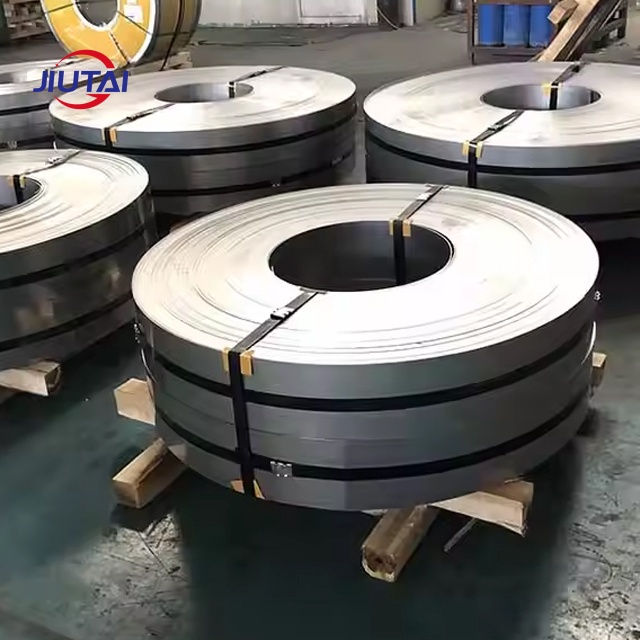
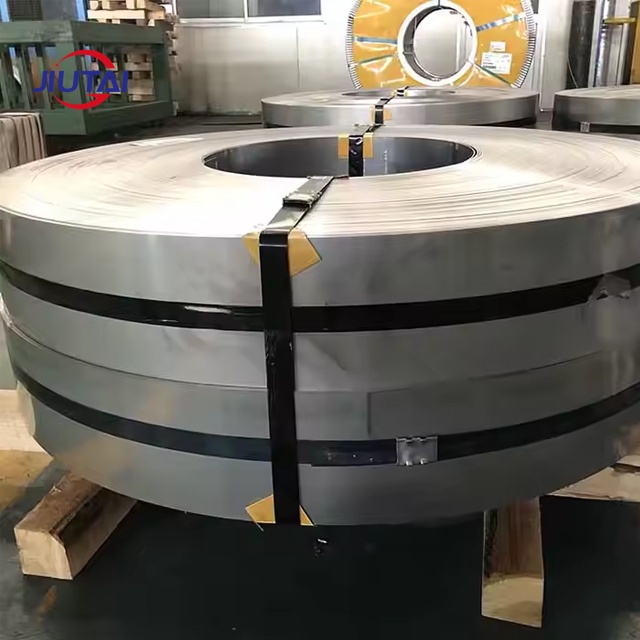
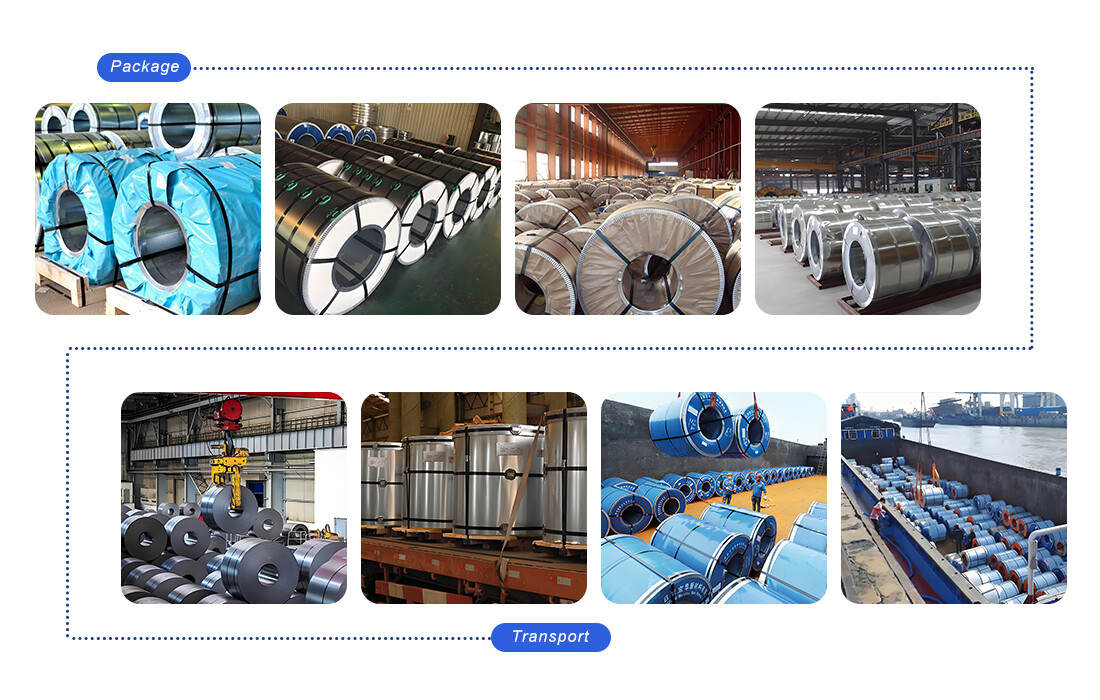
Packing | Eye-to-sky or eye-to-wall on wooden skids, steel strapped, waterproof paper + PE film, edge protectors, coils separated by spacers. Seaworthy export packing standard. |
Documentation | EN 10204 3.1 mill test certificate, packing list, commercial invoice, certificate of origin, fumigation certificate where required |
Third-party inspection | SGS / BV / TUV / Intertek arranged on request (buyer's cost unless agreed otherwise) |
Sample | Small sample piece free of charge; courier cost on the buyer's account |
FAQ
Can I mix several grades in one container?
Yes. The 25 MT per size applies to each size, not to the whole order. Mixing grades and sizes in one container is common and negotiable — tell us what you need and we will confirm what fits.
What is the real difference between coil and strip?
Coil is full mill width, typically 1000–1800 mm. Strip is narrow band, usually 10–600 mm, produced by running a coil through a slitting line. Strip carries a slitting charge but arrives ready for your line.
Why is 430 magnetic and 304 not?
430 is ferritic; 304 is austenitic. In the annealed state 304 is non-magnetic, but cold work induces some magnetism, so a magnet test alone does not identify grade. 430 is magnetic always — which is exactly what you need for a whiteboard or an induction cooker base.
Which grade for a coastal project?
316L as the default. 304 will pit in a marine atmosphere. For hot seawater or high-pressure chloride service, look at 2205 or 2507.
Do you supply 201 for outdoor use?
We do, but we will flag it: 201 has no low-carbon variant and low chloride resistance. It suits indoor decorative and light fabrication. Outdoors near the coast, step up to 304 minimum.
What certificate comes with the material?
EN 10204 3.1 mill test certificate as standard, showing heat number, chemistry and mechanicals. 3.2 or third-party inspection on request.
How fast can you quote?
Send grade and standard, thickness × width, finish, and quantity or coil weight — we come back with a written quote within 12 hours, Shanghai time.
Tell Us Four Things — We'll Come Back With a Price
No long forms. Send these four details and we will quote the whole coil range.
01 Grade and standard
02 Thickness × width
03 Finish
04 Quantity or coil weight
WhatsApp: +86 13516180717
Email: jiutai@hanyang-steel.com
We come back with a written quote within 12 hours, Shanghai time — price, lead time, packing and loading port on one page. No forms, no waiting on a callback.